Renting a Tuk-Tuk in Arugam Bay: The Ultimate Self-Drive Guide

Hannah Brooks
Travel Writer
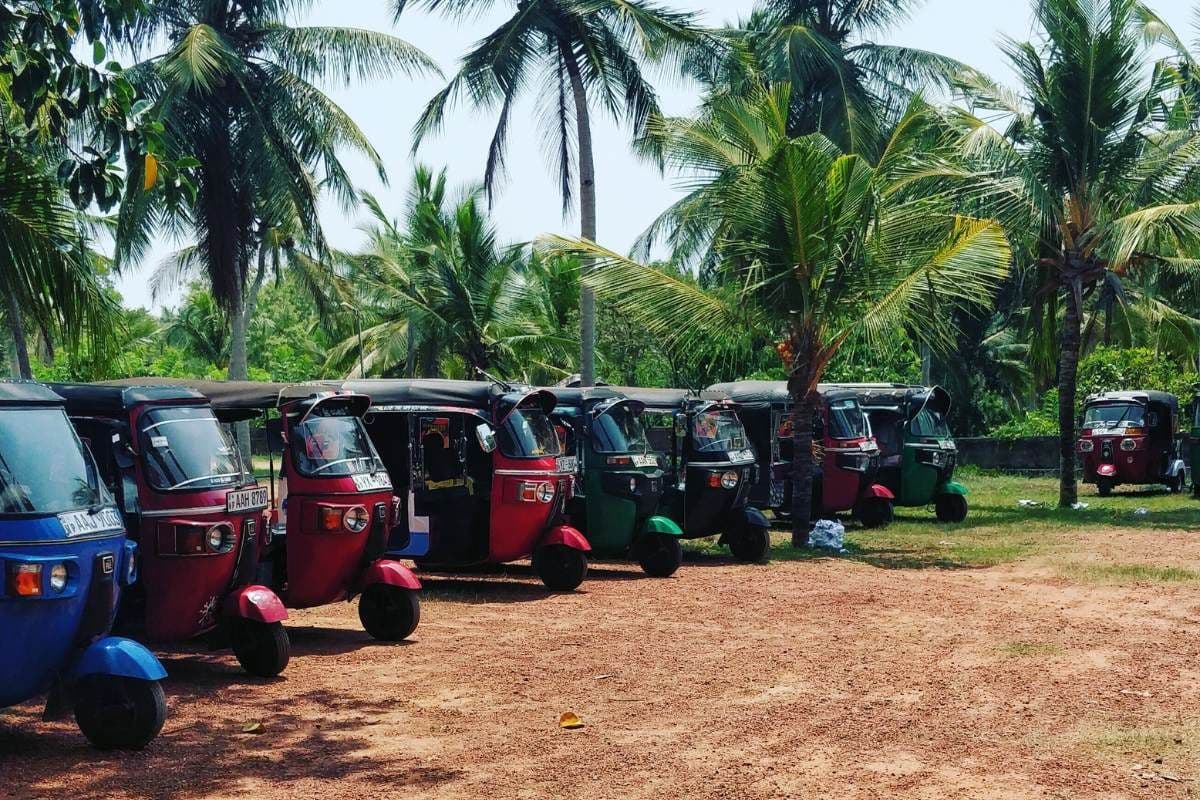
There is no symbol of Sri Lanka more iconic than the three-wheeler, or "tuk-tuk."
For years, tourists were just passengers. But recently, a new trend has taken over the island, and especially Arugam Bay: Self-driving.
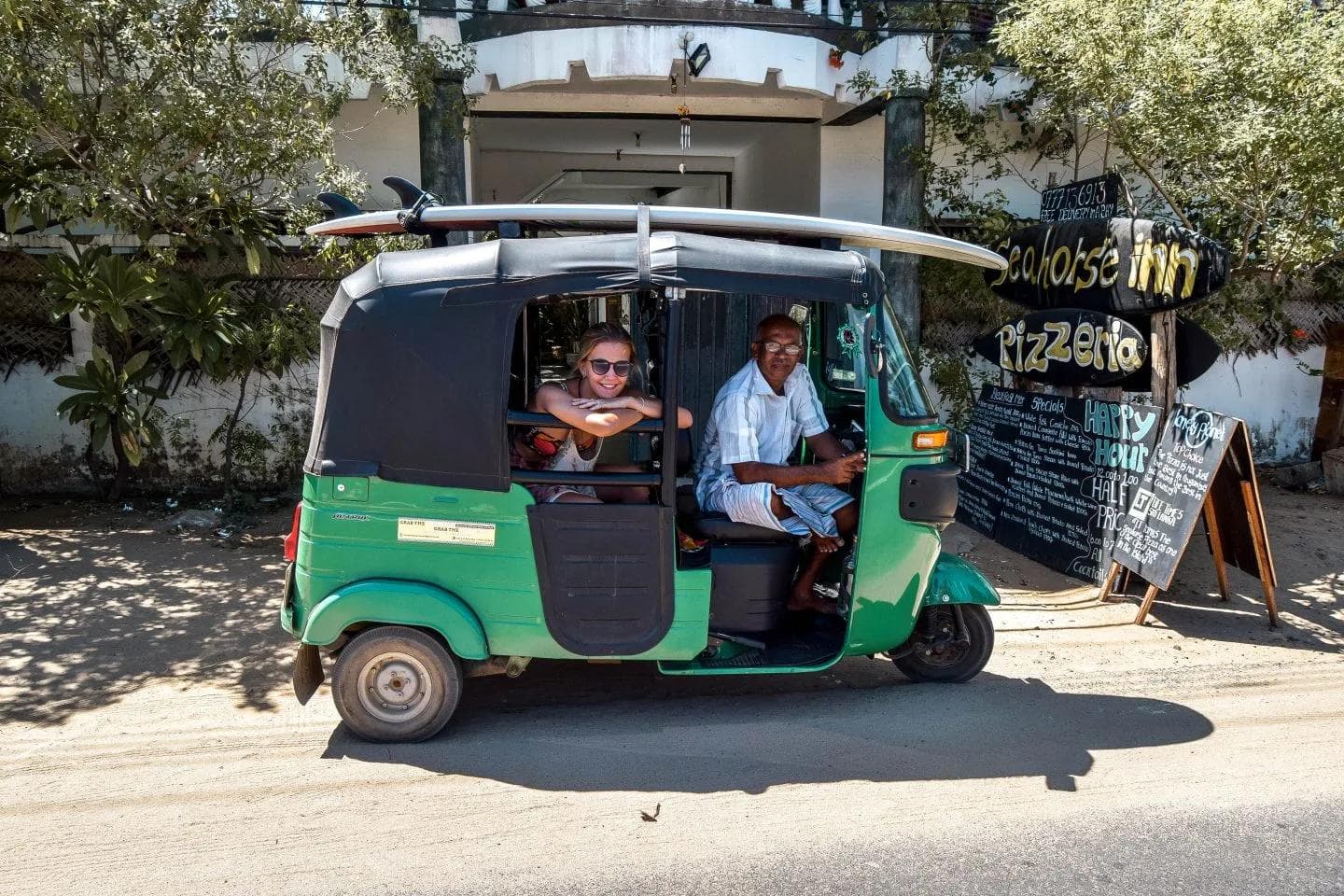
Renting your own tuk-tuk is the ultimate freedom. No waiting for drivers, no negotiating prices every single trip, and total control over your surf safari. You can wake up at 5:00 AM, throw your boards on the roof, and chase the swell at Elephant Rock or Peanut Farm on your own schedule.
But driving a three-wheeler isn't like driving a car. It’s quirky, it’s manual, and there are legal hoops to jump through.
Here is everything you need to know before you get behind the handlebars.
Why Rent a Tuk-Tuk?
The main reason is freedom. Arugam Bay is spread out. The best surf spots (Peanut Farm, Whiskey Point, Okanda) are all 15 to 45 minutes away. If you take a taxi every time, the costs add up, and you are stuck on someone else's timeline.
With your own tuk-tuk, you can explore the backroads, stop to watch wild peacocks, or find a hidden beach and park right on the sand. Plus, it is incredibly fun. There is nothing quite like the breeze hitting your face as you cruise down the Panama Road.
The Learning Curve: It’s Not a Scooter!
Don't assume that because you can drive a car or a motorbike, you can drive a tuk-tuk. It is a completely different beast.
Most rental tuk-tuks are manual transmission, but the gears are on the left handlebar (like a vintage Vespa).
- Clutch: Left hand lever.
- Gears: Twist the left handle.
- Brake: Right foot pedal.
- Reverse: A lever on the floorboard.
It takes a bit of practice. You will stall it. You will bunny-hop. But after a one-hour lesson (which most rental companies provide for free), you will get the hang of it. It’s like riding a lawnmower that can drift.
The Legal Stuff: Licenses and Permits
This is the most important part. You cannot drive a tuk-tuk on your standard home country driving license. You will be fined by the police if you try.
You have two options:
1. International Driving Permit (IDP) with Endorsement If you have an IDP from your home country, you still need to get it "endorsed" by the Automobile Association of Ceylon (AAC) in Colombo. However, many rental agencies can sort this out for you if you send them your documents in advance.
2. Temporary Sri Lankan Driving Permit This is the easier option for most. The rental agency can take your passport and home license to the Department of Motor Traffic and get you a temporary Sri Lankan driving permit valid for one month.
Pro Tip: Always carry your license and insurance papers in the vehicle. Police checks are common in Arugam Bay, but they are usually friendly if your paperwork is in order.
Costs and Insurance
Rental Price: Expect to pay between 3,000 – 4,500 LKR ($10 - $15 USD) per day, depending on the season and how long you rent it for. Long-term rentals (2 weeks+) usually get a discount.
Fuel: Tuk-tuks are incredibly fuel-efficient. A full tank (about 7-8 liters) costs around 2,500 LKR and will last you several days of surf trips.
Insurance: Make sure your rental agreement includes full insurance. Ask specifically about "excess" (the amount you pay if you damage the vehicle). Tuk-tuks are sturdy, but fixing a dented panel or a broken mirror is a cost you want to avoid.
The Surf Setup
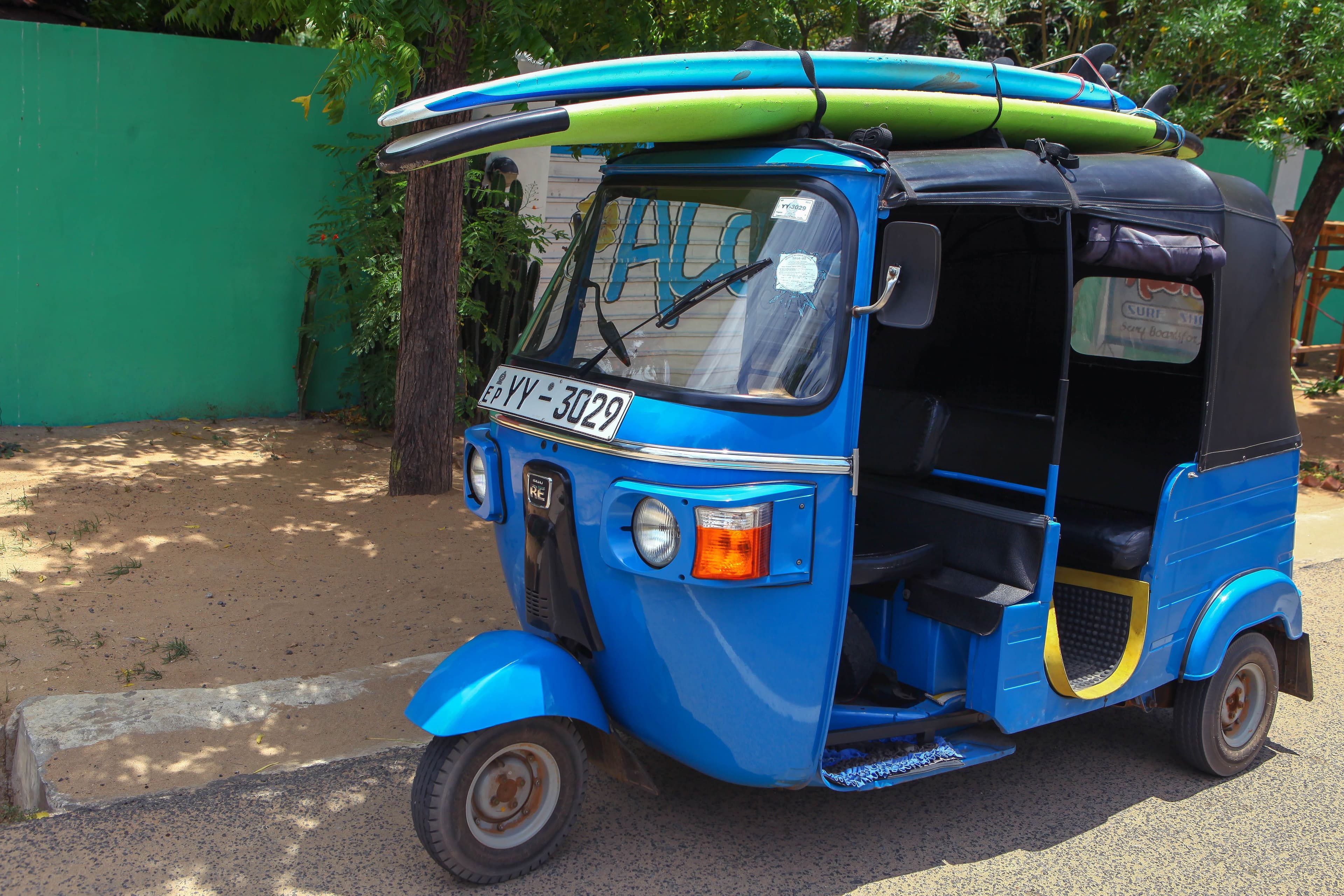
If you are a surfer, make sure you rent a tuk-tuk with a roof rack.
Most rentals in A-Bay come equipped with custom racks and bungee cords. You can easily stack 3 to 4 shortboards or 2 longboards on top. Just make sure they are strapped down tight the wind can be strong on the open causeways!
Safety and Etiquette
Driving at Night: Be extremely careful driving outside the town center at night. The roads are unlit, and wild elephants frequent the roads to Peanut Farm and Okanda. A tuk-tuk offers zero protection against an elephant. If you see one, stop, turn around, or wait for a bigger vehicle (like a bus or truck) to pass and hide behind them.
Speed Limit: The legal speed limit for a tuk-tuk is 40 km/h. It feels slow, but these vehicles are unstable at high speeds. Don't race. Enjoy the view.
Final Verdict
Renting a tuk-tuk transforms your trip from a standard holiday into a real adventure. It connects you to the local way of life and gives you the independence to find the hidden corners of the East Coast.
Just remember: drive slow, watch out for the cows (and elephants), and enjoy the ride!
Enjoyed this story? Share it
About the Author
Hannah Brooks
A passionate east coast explorer and travel storyteller dedicated to uncovering the legendary surf breaks, wild lagoons, ancient temples, and the untamed beauty of Arugam Bay — the jewel of Sri Lanka's east coast.